

How to Beat the Sunday Scaries
The Sunday Scaries are real. Learn why pre-week anxiety happens and a simple 5-minute meditation to actually enjoy your Sunday evenings again.
Daily Zen Team
UltraVibe
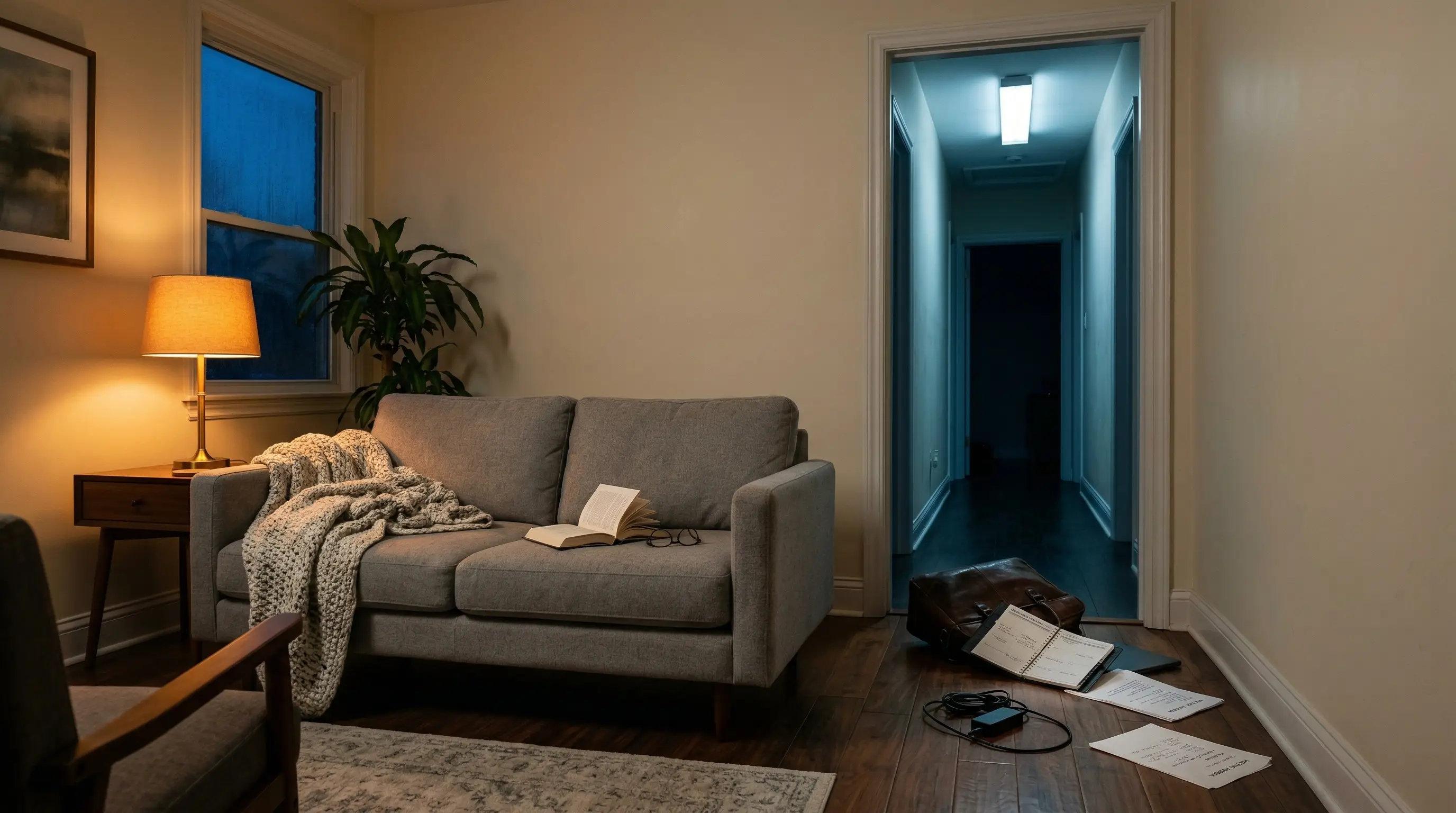
How to Beat the Sunday Scaries: A 5-Minute Meditation for Pre-Week Anxiety
It starts around 4 PM. Maybe you're finishing brunch with friends. Maybe you're grocery shopping. Then it hits: that tightening in your chest, the intrusive thoughts about Monday's meetings, the subtle dread that your weekend is essentially over.
The Sunday Scaries aren't a joke or a Twitter meme. They're a real psychological phenomenon called anticipatory work anxiety, and research suggests up to 80% of working adults experience it regularly. Unlike general work stress—which responds to immediate demands—anticipatory anxiety is future-focused. Your brain simulates problems that haven't happened yet, consuming your present peace in exchange for imaginary catastrophes.
The good news? This specific type of anxiety responds exceptionally well to targeted meditation. Not generic relaxation tracks that ignore why you're anxious. But a practice that directly addresses the mental forecasting keeping you stuck.
Use this page fast: If the Sunday Scaries are already active, skip to the 5-minute Sunday reset, use the Minute 2 inventory to name the exact Monday trigger, then pair it with the Monday follow-through guide for workplace anxiety if the dread usually rolls straight into your workday.
| If your Sunday anxiety feels like... | Start with... | Why it helps | | --- | --- | --- | | A vague cloud of pre-week dread | Minute 1: Locate the sensation | It interrupts mental forecasting and brings you back into the present body. | | One specific Monday conversation or deadline | Minute 2: The inventory | It turns abstract dread into a concrete first step your brain can stop rehearsing. | | A racing nervous system by evening | Minute 3: Boundary breath | The longer exhale helps downshift physiological arousal before bedtime. | | Stress that always comes back Monday morning | Minute 5 + workplace follow-through | A Sunday reset works better when it feeds into a Monday coping plan instead of ending at bedtime. |
Start with the version of Sunday night you are actually in
| If it is already... | Your real problem is usually... | Do this first | Then go here | | --- | --- | --- | --- | | 4–6 PM | The week is bleeding into your last free hours | Run the full 5-minute Sunday reset before the dread fully hardens | Come back to the Friday closure ritual next week | | 7–9 PM | You are replaying one meeting, inbox, or deadline | Do Minute 2: The inventory and write one Monday action | Follow it with meditation for workplace anxiety if the same trigger usually follows you into the office | | In bed | The anxiety has become a sleep problem, not just a work problem | Skip the analysis and use the evening meditation for sleep routine | Use this page again earlier next Sunday | | Every single week | Your nervous system expects Sunday night to mean threat | Keep this reset, but also read return to work after burnout if the dread is starting to feel structural instead of situational |
What the Sunday Scaries Actually Are
Anticipatory anxiety is your brain's threat-detection system misfiring. Evolution trained us to anticipate danger—useful when avoiding predators, less useful when dreading a Tuesday status meeting.
When Sunday anxiety hits, your mind begins mental forecasting:
- "What if I can't finish everything next week?"
- "What if my manager asks about that delayed project?"
- "What if next week is as overwhelming as the last one?"
Your nervous system responds to these imagined scenarios with real physiological arousal: elevated cortisol, racing thoughts, muscle tension. You're experiencing fight-or-flight responses to threats that exist only in your head.
The cruel irony? This anxiety robs you of the recovery time you need. You enter Monday already depleted, which creates more stress, which makes next Sunday worse. It's a cycle that compounds until addressed deliberately.
Why Generic Meditation Often Fails
Here's the problem with most "anxiety meditations": they treat all anxiety as the same. But anticipatory work anxiety has distinct characteristics that generic approaches miss. If you want the broader industry context, see why most meditation apps fail to retain users—the mismatch between your moment and a fixed recording is the core problem.
It's temporal. The anxiety is about the future, not the present. Sitting in silence often makes it worse—your mind uses the space to run disaster scenarios.
It's specific. You're not anxious about "work." You're anxious about a particular presentation, conversation, or workload. Generic guidance doesn't address your specific trigger.
It's habitual. If you've had Sunday anxiety for months or years, it's become a conditioned response. Your brain associates Sunday evening with dread automatically, regardless of actual next-week demands.
What you need isn't relaxation—it's cognitive interruption. A practice that breaks the mental forecasting loop and grounds you in what you can actually control.
The 5-Minute Sunday Reset Meditation
This practice is designed specifically for anticipatory anxiety. It interrupts mental forecasting, grounds you in the present, and creates a boundary between weekend and workweek.
When to do it: Sunday evening, when you first notice the anxiety creeping in. Before dinner works well—you want to complete this before the dread fully establishes itself.
What you need: A quiet spot where you won't be interrupted for five minutes. Sit in a chair with your feet flat on the floor, or lie down if you prefer.
Minute 1: Locate the Sensation
Close your eyes. Don't try to relax yet. Instead, scan your body and find where the anxiety lives. Common locations:
- Tightness in your chest
- Butterflies or knots in your stomach
- Tension in your jaw or shoulders
- Restless energy in your legs
Place your attention there. Not to fix it—to observe it. Notice the quality: Is it tight? Buzzing? Heavy? Does it have a temperature? Give it a color if that helps.
This step interrupts the mental forecasting by redirecting attention from thoughts (the future) to sensations (the present).
Minute 2: The Inventory
Open your eyes. Grab a piece of paper or your phone's notes app. You're going to externalize the anxiety by listing exactly what's triggering it.
Write down:
- The specific thing you're dreading about the week ahead (be precise: "the presentation to the product team on Thursday," not "work stuff")
- The worst-case scenario your brain is imagining
- One small action you could take Monday morning that would address this concern
Example:
- Trigger: Feedback meeting with my manager Tuesday
- Worst case: She'll say I'm underperforming and put me on a performance plan
- Monday action: Review my recent projects and note three concrete wins to mention
This isn't toxic positivity. You're not forcing yourself to feel better. You're taking the abstract dread and making it concrete—so your brain can stop simulating it.
Minute 3: The Boundary Breath
Close your eyes again. This breathing pattern creates a physiological shift that interrupts anxiety loops.
Inhale through your nose for 4 counts. Hold for 4 counts. Exhale through your mouth for 6 counts. Hold empty for 2 counts.
Repeat 4 times.
The extended exhale activates your parasympathetic nervous system—your body's brake pedal. The counting occupies working memory, making it harder for anxious thoughts to intrude.
Minute 4: The Pivot
This is the core move. You're going to deliberately shift from anticipation to presence.
Bring to mind something happening in the next 24 hours that you genuinely look forward to. Not something big. Something small and concrete:
- Your morning coffee
- A TV show you're watching
- A text exchange with a friend
- A workout you have planned
Visualize it specifically. Where will you be? What will it feel like? What sounds, smells, tastes are associated with it?
You're training your brain that the immediate future contains pleasure, not just obligation. This creates cognitive flexibility—the ability to shift out of threat-mode when appropriate.
Minute 5: The Intention
Final minute. No need to visualize or breathe in any particular way. Just sit with this intention:
"I will handle what comes when it comes. Not before."
Repeat it silently if it helps. Or don't—just let the concept settle.
This isn't denial. You're acknowledging that Monday will bring challenges, and you're also acknowledging that you'll meet them with the resources you have. The catastrophic predictions are stories. This intention is a commitment to respond to reality, not imagination.
Beyond the Meditation: Sunday Evening Strategies
The meditation creates a reset. These practices extend it:
Create a Friday Closure Ritual
The strongest predictor of Sunday anxiety is loose ends from the previous week. Spend 15 minutes every Friday afternoon:
- List what you accomplished
- Note what's genuinely unfinished
- Identify the first small step for Monday morning
This gives your brain closure. The unfinished work is captured in a system you trust. It won't be forgotten, so your brain can stop rehearsing it.
Schedule a "Worry Window"
Instead of letting anxiety run all Sunday evening, contain it. Set a 15-minute timer late Sunday afternoon. During that window, worry freely—write down every concern about the week ahead. Outside that window, when worries arise, tell yourself: "Worry time is at 5 PM. This can wait until then."
Most people find that by the time their scheduled window arrives, the urgency has faded. The thoughts feel less catastrophic when you're deliberately inviting them instead of resisting them.
Protect the Transition
The hours between Sunday afternoon and Monday morning are psychologically important. Guard them:
- No checking work email after Sunday 6 PM
- No "just quickly" finishing tasks
- No mentally rehearsing Monday's calendar
These behaviors reinforce that you're never truly off. They train your nervous system to stay in vigilance mode. The Sunday meditation creates a boundary—respect it by behaviorally disconnecting.
Move Your Body
Anxiety is physical energy. Sitting on the couch ruminating traps it in your system. A 20-minute walk Sunday evening does two things: it metabolizes the stress hormones circulating in your body, and it provides mental stimulation that interrupts looping thoughts.
Don't make it a workout. Just move enough to change your physical state.
When Sunday Anxiety Signals Something Real
Sometimes anticipatory anxiety isn't overreactive—it's informative. If your Sunday dread is severe, consistent, and accompanied by these signs, your job may be the problem, not your response to it:
- You feel relief when thinking about getting sick and missing work
- You're having trouble sleeping multiple nights per week
- You're irritable with people you care about on Sundays
- You're fantasizing about quitting without a plan
Meditation helps you distinguish between appropriate caution (your job genuinely is unsustainable) and habitual anxiety (your brain is running disaster scripts regardless of reality). It won't fix a toxic workplace. But it will help you think clearly about whether you need to leave—and what your timeline should be.
The Bigger Pattern
Sunday Scaries are one manifestation of a larger modern problem: the erosion of boundaries between work and recovery. Remote work, always-on communication, and performance culture have made it harder to truly disconnect. Your brain never gets the signal that it's safe to rest.
The meditation above works because it manually creates what your environment no longer provides: a clear transition. It tells your nervous system, "The work week is not here yet. This time belongs to you."
With practice, this boundary becomes easier to establish. The Sunday anxiety may not disappear entirely, but it loses its grip. You reclaim your evening. And you enter Monday with the energy you actually need to do your job well.
Your Personalized Practice
The five-minute structure above works for most people, but anticipatory anxiety is personal. Your specific triggers, physical sensations, and effective interventions are unique to you.
Daily Zen creates personalized meditation sessions based on what's actually happening in your life. Instead of generic "relaxation" tracks, you get guided practices that address your specific Sunday stressor—whether it's a difficult conversation, a deadline you're behind on, or the general overwhelm of an unsustainable workload.
This Sunday evening, try the reset above. If you find it helpful, consider what a personalized meditation—designed specifically for your anticipatory anxiety patterns—could do for your week. If you want the category explained more clearly, read what AI meditation is and how a personalized meditation app works. If you're comparison-shopping instead of category-learning, use our guide to the best Headspace alternative to see where Calm, Headspace, and AI meditation actually differ. And if Monday morning is where the stress really spikes, pair this with our guide to meditation for workplace anxiety so the reset carries into your workday.
Your weekend doesn't have to end in dread. Five minutes of deliberate practice can change the entire trajectory of your week.
Daily Zen generates personalized meditation and affirmation sessions based on your specific situation. No generic content—just guidance for what you're actually experiencing.
Related Articles
How to Meditate When Your Brain Won't Shut Up
Why racing thoughts during meditation aren't a failure—and how the right approach can actually work with your busy mind instead of against it
AI Daily Planner or Focus Reset: Which One Do You Need?
A calm comparison of AI daily planners and focus reset tools for people whose day keeps changing after they make the plan.
Best Focus Apps in 2026: The Quiet Stack for Deep Work
A practical guide to focus apps in 2026, built around planning, protected attention, and short resets instead of another noisy dashboard.
Ready to find your calm?
UltraVibe creates personalized meditations that adapt to your mood and schedule.
Try UltraVibe free